The Role of Spices in Elevating Gourmet Dishes
Understanding the Essence of Spices in Cooking
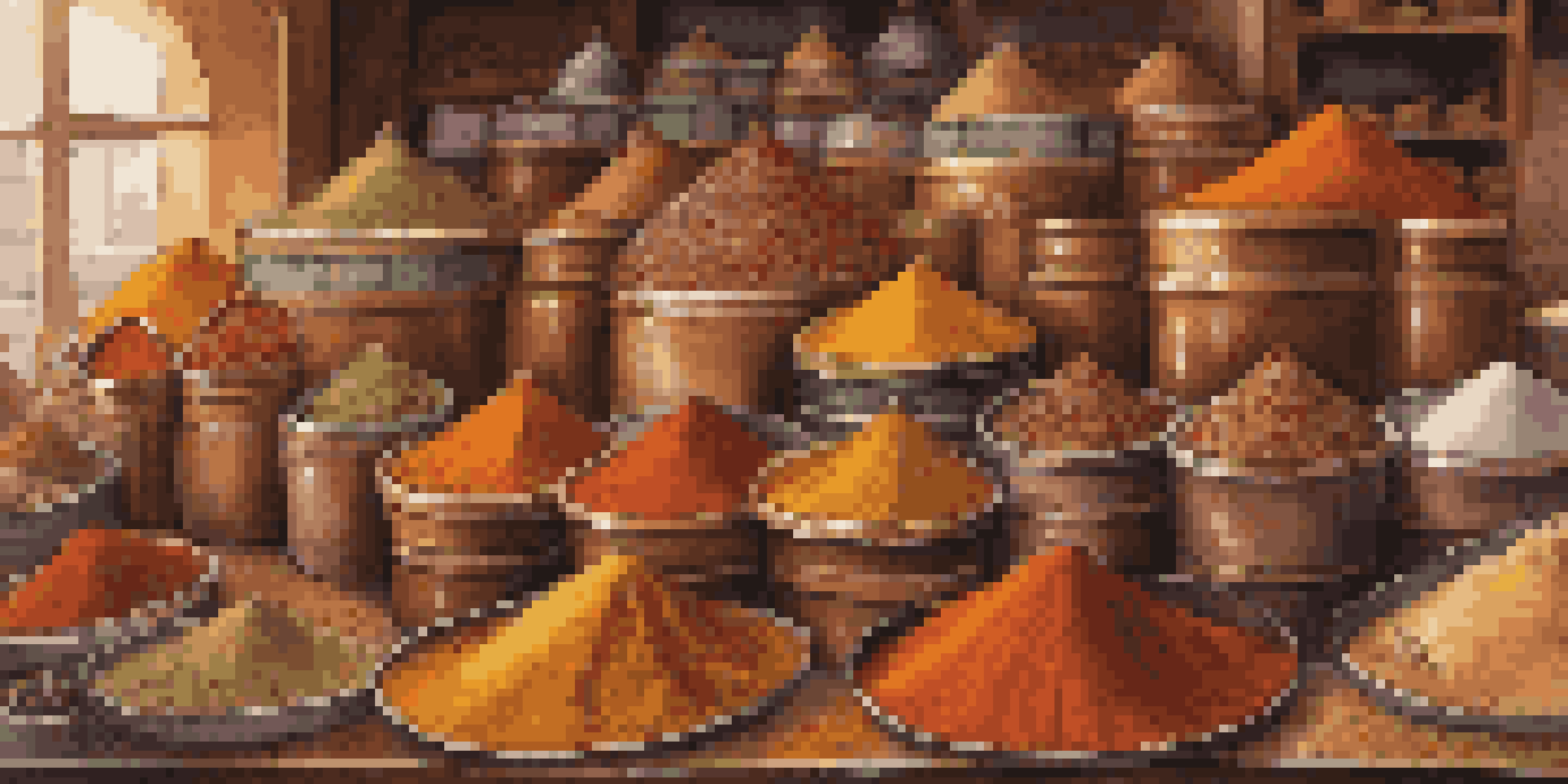
Spices are more than just flavor enhancers; they are the soul of gourmet cooking. They add depth, aroma, and complexity to dishes, turning simple ingredients into culinary masterpieces. Just like a painter uses different colors to create a vibrant canvas, chefs utilize spices to craft unforgettable flavors.
Spices are the aroma of life, they evoke memories and create connections to our past.
Each spice has its unique characteristics and history, often tied to the regions they come from. For instance, saffron, known for its rich golden hue and delicate flavor, has been cherished since ancient times. Its ability to elevate a dish's aesthetic and taste exemplifies how spices can transform a meal into an experience.
Moreover, spices can also evoke emotions and memories, making them powerful tools in a chef's arsenal. A sprinkle of cinnamon might remind someone of home-baked apple pie, while a dash of cumin can transport them to a bustling market in Morocco. This emotional connection adds layers to the dining experience.
How Spices Enhance Flavor Profiles in Dishes
At the heart of gourmet cooking lies the balance of flavors: sweet, savory, sour, bitter, and umami. Spices play a crucial role in enhancing these flavors, bringing harmony to the dish. For example, a pinch of chili can add heat, while a touch of paprika can introduce a smoky sweetness.

Additionally, spices can create a beautiful contrast in flavors. Think of how a tangy lemon zest can brighten a rich, creamy risotto. Just like an artist contrasts light and dark in their work, chefs use spices to create a delightful interplay of flavors that keeps diners coming back for more.
Spices Transform Cooking Experiences
Spices add depth, aroma, and emotional connections to dishes, turning simple meals into memorable culinary experiences.
This careful balancing act is what elevates a dish from ordinary to extraordinary. When crafted skillfully, the right spices can highlight the natural flavors of the main ingredients, allowing them to shine while still contributing their unique personality.
The Cultural Significance of Spices in Gourmet Cuisine
Spices are deeply intertwined with cultural identities, often reflecting the history and traditions of a region. Each culture has its signature spices, which can tell stories of trade, discovery, and culinary evolution. For instance, Indian cuisine is famous for its diverse spice blends like garam masala, which encapsulate the rich tapestry of its heritage.
The secret of good cooking is, first, having a good supply of ingredients, and second, knowing how to combine them.
In gourmet cooking, incorporating spices from various cultures can create fusion dishes that celebrate diversity. Imagine a taco filled with curry-spiced chicken or a sushi roll accented with wasabi and cilantro. These culinary innovations not only excite the palate but also foster a sense of global community.
By embracing the cultural significance of spices, chefs can create dishes that resonate on a deeper level. This connection to tradition and culture enriches the dining experience, making each bite a journey through time and place.
The Science Behind Spices: Flavor Compounds at Work
Understanding the science behind spices can enhance their application in gourmet cooking. Each spice contains unique volatile compounds that contribute to its flavor and aroma. For example, the pungent kick of black pepper comes from piperine, while the sweet notes of vanilla arise from vanillin.
These compounds interact with our taste receptors, creating complex flavor profiles that can evoke specific sensations. This is why a well-seasoned dish can feel vibrant and alive, while a bland one falls flat. Chefs who grasp this science can manipulate flavors to achieve desired outcomes in their culinary creations.
Balancing Flavors with Spices
Careful use of spices enhances flavor profiles, creating a harmonious interplay that elevates dishes from ordinary to extraordinary.
Moreover, the health benefits of spices, such as anti-inflammatory properties in turmeric and antioxidant-rich qualities in oregano, add another layer of appeal. By thoughtfully incorporating these spices, chefs not only enhance flavor but also promote overall well-being in their dishes.
Creating Signature Spice Blends for Unique Dishes
One way chefs elevate their gourmet dishes is through the creation of signature spice blends. These unique combinations allow for personalization and creativity in cooking. Think of how Italian chefs might use a blend of rosemary, thyme, and garlic to create a distinctive flavor profile that sets their dishes apart.
Crafting a spice blend involves understanding the balance of flavors and how they interact. A well-balanced mix can bring out the best in ingredients, creating a harmonious taste experience. For instance, a Moroccan ras el hanout combines warm and earthy spices, resulting in a dish that is both aromatic and comforting.
By experimenting with different spices and ratios, chefs can create blends that reflect their style and vision. This not only adds a personal touch to their cuisine but also invites diners to explore new flavor territories.
The Art of Pairing Spices with Ingredients
Successful gourmet cooking often hinges on the art of pairing spices with the right ingredients. Different spices complement various foods, enhancing their natural flavors and textures. For instance, cinnamon pairs beautifully with apples and sweet potatoes, while cumin works wonders with beans and meats.
Understanding these pairings is essential for creating well-rounded dishes. A good rule of thumb is to consider the flavor profile of the main ingredient and choose spices that either enhance or contrast those notes. For example, a rich chocolate dessert can be uplifted with a hint of sea salt and chili for an unexpected twist.
Cultural Significance of Spices
Spices reflect cultural identities and histories, allowing chefs to create fusion dishes that celebrate diversity and traditions.
This thoughtful approach to pairing spices not only elevates the dish but also creates a memorable dining experience. Diners often remember meals that surprise their taste buds, showcasing the chef's expertise in flavor combinations.
Conclusion: Spices as Essential Elements in Gourmet Cooking
In conclusion, spices are indispensable in the realm of gourmet cooking. They elevate dishes beyond mere sustenance, transforming them into culinary experiences that engage the senses. From enhancing flavor profiles to celebrating cultural significance, the role of spices is multifaceted and profound.
By understanding the science behind spices and mastering the art of pairing them with ingredients, chefs can craft unforgettable meals that resonate with diners. The creation of unique spice blends further showcases the creativity and individuality of a chef's culinary approach.
Ultimately, the journey through the world of spices is one of exploration and discovery. Whether you're a seasoned chef or a home cook, embracing the power of spices can lead to delicious adventures in the kitchen.